Embark on a journey through the world of Childhood Vaccinations and Pediatric Care, where the significance of preventive healthcare for children is highlighted with expert insights and valuable information.
Explore the realm of childhood vaccinations, pediatric care, and the crucial role they play in safeguarding the well-being of our young ones.
Childhood Vaccinations
Childhood vaccinations play a crucial role in protecting children from serious and potentially life-threatening diseases. By receiving vaccines at a young age, children develop immunity to various illnesses, reducing the risk of outbreaks within the community.
Benefits and Risks of Childhood Vaccinations
- Vaccinations provide immunity against diseases such as measles, polio, and whooping cough, preventing severe complications and even death.
- While vaccines may cause mild side effects like fever or soreness at the injection site, the benefits of immunization far outweigh the risks.
- Vaccinating children also contributes to herd immunity, protecting vulnerable individuals who cannot be vaccinated due to medical reasons.
Common Childhood Vaccines
- MMR (Measles, Mumps, Rubella) Vaccine: Protects against three highly contagious diseases.
- DTaP (Diphtheria, Tetanus, Pertussis) Vaccine: Guards against these bacterial infections.
- Hib (Haemophilus Influenzae type b) Vaccine: Prevents meningitis and other serious illnesses.
Successful Vaccination Programs
- The Global Polio Eradication Initiative: A worldwide effort to eliminate polio, significantly reducing cases globally.
- The Measles & Rubella Initiative: Targeting measles and rubella, leading to a decline in deaths caused by these diseases.
- The HPV Vaccination Program: Protects against human papillomavirus, reducing the risk of cervical cancer in women.
Vaccination Schedule
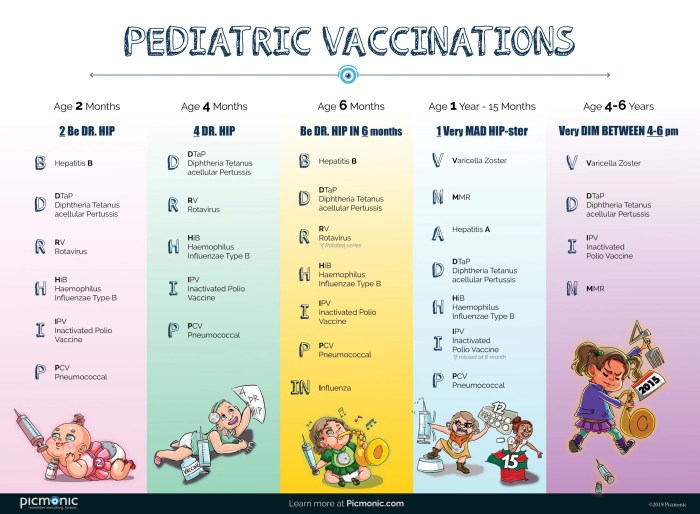
Childhood vaccinations are crucial for protecting children from serious diseases. Following the recommended vaccination schedule is essential to ensure optimal protection and immunity against various illnesses.
Typical Vaccination Schedule
- Infancy: Vaccines for diseases such as hepatitis B, rotavirus, diphtheria, tetanus, pertussis, Haemophilus influenzae type b (Hib), polio, pneumococcal, and measles, mumps, rubella (MMR) are typically administered during the first year of life.
- Early Childhood: Additional doses of certain vaccines are given between 12-18 months, including boosters for measles, mumps, rubella (MMR) and varicella (chickenpox).
- Adolescence: Vaccines for diseases like HPV, meningococcal, and tetanus, diphtheria, pertussis (Tdap) are recommended around the ages of 11-12 years.
Significance of Following the Recommended Schedule
Adhering to the recommended vaccination schedule ensures that children receive protection against diseases at the most vulnerable stages of their lives. It helps build immunity early on and prevents outbreaks of vaccine-preventable illnesses.
Timing and Spacing of Vaccinations
Vaccinations are spaced out to allow the immune system to respond effectively to each vaccine. Healthcare providers carefully consider the timing and intervals between doses to maximize the body’s immune response and provide long-lasting immunity.
Determining the Appropriate Schedule
Healthcare providers take into account a child’s age, medical history, and risk factors when determining the appropriate vaccination schedule. They follow guidelines from organizations like the CDC to recommend vaccines based on the best available evidence and research.
Vaccine Safety
Vaccines undergo rigorous testing and monitoring to ensure they are safe and effective for use in the general population. Here are some key points regarding vaccine safety:
Safety Measures During Vaccine Development and Testing
- Vaccines go through multiple stages of testing, including preclinical studies, clinical trials, and post-licensure monitoring.
- Regulatory agencies like the FDA and CDC closely oversee vaccine development to ensure safety and efficacy.
- Adverse events following vaccination are continuously monitored to identify any potential safety concerns.
- Manufacturers adhere to strict quality control measures to maintain the safety and purity of vaccines.
Common Misconceptions or Myths about Vaccine Safety
- One common myth is that vaccines cause autism, which has been debunked by numerous scientific studies.
- Another misconception is that vaccines contain harmful ingredients, when in reality, they undergo thorough testing to ensure safety.
- Some people believe that natural immunity is superior to vaccine-induced immunity, but vaccines are essential in preventing serious diseases.
Reporting and Addressing Adverse Reactions to Vaccines
- Healthcare providers are trained to recognize and report adverse reactions to vaccines through systems like VAERS (Vaccine Adverse Event Reporting System).
- Most vaccine reactions are mild and temporary, but serious reactions are rare and are carefully investigated.
- Individuals can report suspected vaccine reactions to their healthcare provider or directly to the Vaccine Adverse Event Reporting System.
Role of Healthcare Professionals in Monitoring Vaccine Safety
- Healthcare professionals play a crucial role in educating the public about vaccine safety and addressing concerns or misinformation.
- They monitor vaccine safety by reporting adverse events, conducting surveillance, and staying informed about the latest research and recommendations.
- Healthcare providers also play a key role in promoting vaccination to prevent the spread of infectious diseases and protect public health.
Pediatric Care
Pediatricians play a crucial role in providing healthcare for children, focusing on their unique needs from infancy through adolescence.
Well-child visits are essential in monitoring a child’s growth and development, allowing pediatricians to assess milestones, address concerns, and provide guidance to parents.
Preventive Medicine and Early Intervention
- Pediatric care emphasizes preventive medicine, aiming to promote overall health and well-being in children by implementing strategies to prevent illnesses and injuries.
- Early intervention is a key component of pediatric care, enabling healthcare providers to identify and address any developmental delays or health issues promptly.
- Through regular check-ups and screenings, pediatricians can detect potential problems early on and intervene effectively to ensure optimal outcomes.
Specialized Training and Expertise
- Pediatric healthcare providers undergo specialized training to understand the unique medical, emotional, and developmental needs of children.
- They are equipped with the knowledge and skills to provide comprehensive care, including immunizations, screenings, and guidance on nutrition and behavior.
- Pediatricians work closely with families to promote a healthy lifestyle and address any concerns or challenges that may arise during a child’s growth and development.
In conclusion, Childhood Vaccinations and Pediatric Care stand as pillars of early health interventions, promoting a future where children thrive under the umbrella of comprehensive healthcare and well-being.
Commonly Asked Questions
Are childhood vaccinations mandatory?
Childhood vaccinations are recommended by health authorities for disease prevention, but in some cases, they may be required for school enrollment or travel.
Can vaccines cause autism?
Extensive research has debunked any link between vaccines and autism, with numerous studies confirming the safety of vaccines.
How do pediatricians determine the appropriate vaccination schedule for each child?
Pediatricians consider factors like age, health status, and previous vaccinations to tailor a vaccination schedule that aligns with the child’s specific needs.
What are the common misconceptions about vaccine safety?
Common misconceptions include the belief that vaccines contain harmful ingredients or can cause serious side effects beyond minor reactions like soreness or fever.
Why are well-child visits important in pediatric care?
Well-child visits allow pediatricians to track a child’s growth, development, and overall health, enabling early detection of any issues and timely interventions.