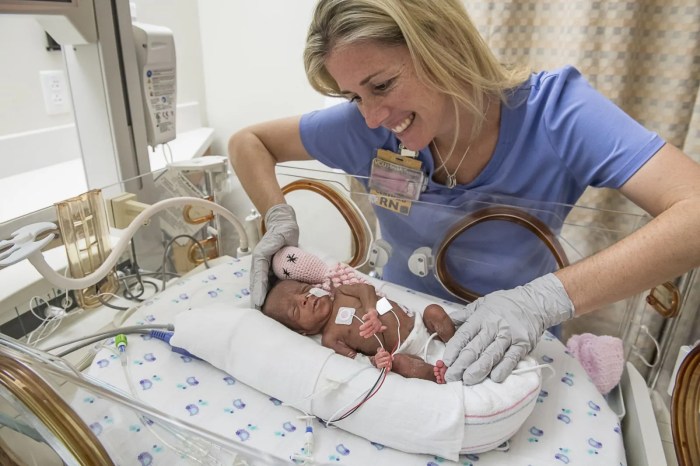
As Pediatric Care for Preemies takes center stage, this opening passage beckons readers into a world crafted with good knowledge, ensuring a reading experience that is both absorbing and distinctly original.
Premature babies require specialized care to thrive, from unique healthcare needs to tailored feeding protocols, ensuring their delicate start in life is well-supported and nurtured.
Pediatric Care for Preemies

Premature babies, also known as preemies, have unique healthcare needs due to their underdeveloped organs and systems. These special needs require specialized medical care to ensure their healthy growth and development.
Specialized Medical Equipment in NICUs
Neonatal Intensive Care Units (NICUs) are equipped with specialized medical equipment tailored to the specific needs of preemies. This includes incubators to regulate temperature, ventilators to assist with breathing, and monitors to track vital signs such as heart rate and oxygen levels.
Importance of Feeding Protocols
Feeding protocols play a crucial role in pediatric care for preemies. These protocols are carefully designed to provide preemies with the necessary nutrients while minimizing the risk of complications such as feeding intolerance or aspiration. Healthcare providers closely monitor feeding schedules and adjust them based on the baby’s tolerance and nutritional needs.
Neonatal Screening and Monitoring
Regular health assessments for preterm newborns are crucial in ensuring their well-being and proper development. These assessments help healthcare providers identify any potential health issues early on, allowing for timely intervention and treatment.Neonatal screening tests play a vital role in this process by detecting various conditions that may not be apparent at birth. These tests can help identify genetic disorders, metabolic conditions, hearing loss, and other health issues that could impact the baby’s growth and development.
Early detection through neonatal screening tests can significantly improve outcomes for preterm newborns.Monitoring preemies involves keeping a close eye on their growth, feeding patterns, and developmental milestones. Healthcare providers track weight gain, head circumference, and length to ensure the baby is growing at a healthy rate. Developmental assessments help identify any delays or concerns that may require intervention or therapy.
Importance of Regular Health Assessments
Regular health assessments for preterm newborns are essential to monitor their growth and development effectively. These assessments involve tracking various parameters to ensure the baby is thriving and meeting milestones appropriately.
- Weight Gain: Monitoring weight gain is crucial to ensure the baby is receiving adequate nutrition and growing at the expected rate.
- Developmental Milestones: Tracking developmental milestones such as rolling over, sitting up, and crawling helps identify any delays that may require intervention.
- Feeding Patterns: Observing feeding patterns can help identify any issues with feeding or nutrition that may impact the baby’s growth.
Respiratory Care for Preemies
Premature infants often face various respiratory challenges due to their underdeveloped lungs and respiratory systems. This can result in difficulties in breathing and oxygen exchange, making respiratory care a crucial aspect of pediatric care for preemies.
Common Respiratory Challenges
- Respiratory Distress Syndrome (RDS): A common condition in preterm infants caused by a lack of surfactant, leading to difficulty in breathing.
- Chronic Lung Disease (CLD): Also known as Bronchopulmonary Dysplasia (BPD), a condition that affects the lungs’ development and function.
- Apnea of Prematurity: Brief pauses in breathing that are common in premature babies.
Use of Respiratory Support Devices
- Continuous Positive Airway Pressure (CPAP): A non-invasive method that helps keep the airways open and improve oxygenation.
- Ventilators: Mechanical devices used to assist or control breathing in infants who are unable to breathe on their own adequately.
Strategies for Preventing Respiratory Infections
- Hand Hygiene: Ensuring that caregivers and healthcare providers wash their hands before handling the baby to prevent the spread of infections.
- Vaccinations: Following the recommended vaccination schedule to protect the baby from respiratory infections.
- Limiting Exposure: Avoiding crowds and sick individuals to reduce the risk of the baby contracting respiratory illnesses.
Neurodevelopmental Support
Early intervention programs play a crucial role in supporting the neurodevelopment of preterm babies. These programs aim to address developmental delays and provide specialized care to help preemies reach their full potential.
Role of Physical Therapy in Motor Skills Development
Physical therapy is essential in supporting motor skills development in premature infants. Therapists work closely with preemies to improve muscle strength, coordination, and overall motor function. Through guided exercises and activities, physical therapy helps preemies achieve important milestones in their physical development.
Assessment and Support for Cognitive Development
Pediatric care providers assess the cognitive development of preterm babies through various developmental screening tools and assessments. These evaluations help identify any delays or challenges in cognitive development early on, allowing for timely interventions and support. By engaging in activities that stimulate cognitive growth, such as interactive play and educational games, pediatric care providers play a vital role in promoting healthy cognitive development in preterm infants.
In conclusion, Pediatric Care for Preemies encompasses a range of crucial aspects, from respiratory challenges to neurodevelopmental support, all aimed at providing the best possible start for these tiny fighters as they embark on their journey of growth and development.
FAQ Guide
What are some common respiratory challenges faced by premature infants?
Premature infants often struggle with underdeveloped lungs, making conditions like apnea and respiratory distress syndrome common challenges.
How do neonatal screening tests help identify potential health issues in preterm newborns?
Neonatal screening tests can detect genetic, metabolic, and developmental disorders early on, allowing for timely intervention and treatment.


